Custom Screen Doors vs. Big-Box: Pet-Friendly Options
Thinking about a new screen door? Here’s how to choose between big-box and custom options, plus pet-friendly features that actually hold up.
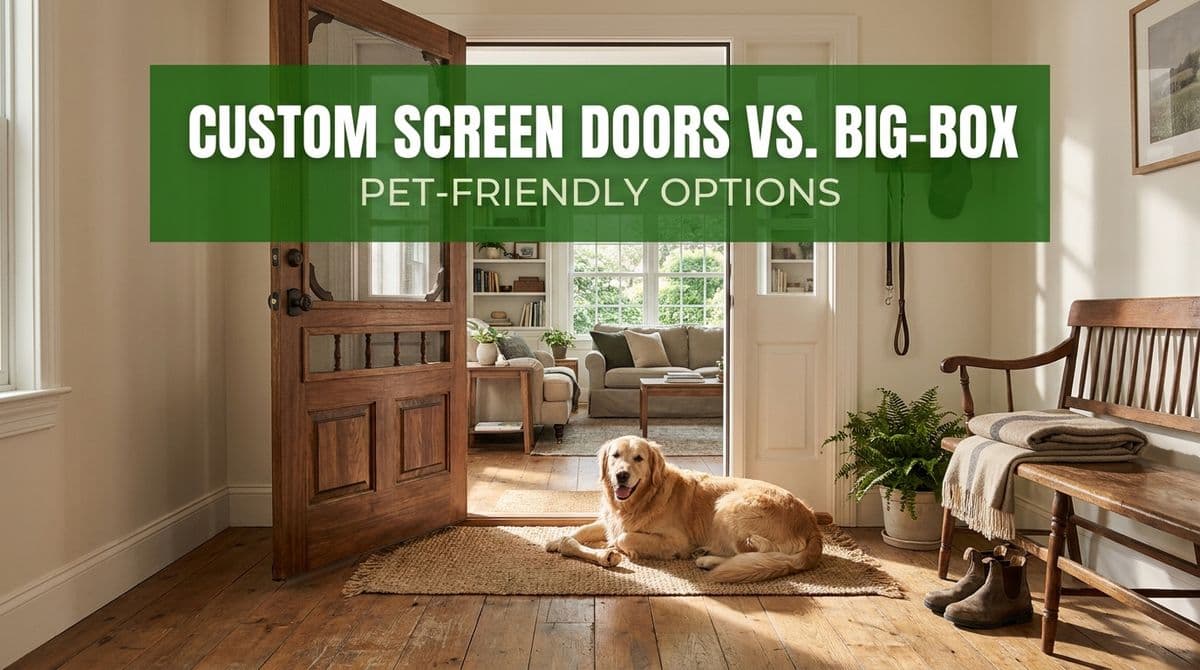
Custom Screen Doors vs. Big-Box Options: What Really Matters
We recently got a call from a customer — let’s call him Jason — asking a question we hear a lot: “Do you guys do full screen door replacements, or just the screen?” He was trying to decide between picking up a $120 door from a big-box store or having us build a custom one for his home.
Jason also had pets and wondered if we could add one of those flapping pet doors into the screen itself. That’s where the conversation got interesting, because it opened up a bigger topic: how do you choose the right screen door, especially if you have pets?
Let’s walk through the same pros, cons, and options we shared with Jason, so you can make a smart, long-lasting choice for your own home.
Big-Box Screen Doors: Cheap and Fast, But With Trade-Offs
When Jason called, we were upfront with him: you can absolutely go to a big-box store and grab a pre-made screen door for around $120. They do work, and for some homes and budgets, that’s perfectly fine.
But there are a few trade-offs we see all the time when we’re called out to replace those doors later:
- Fit isn’t perfect: Pre-made doors come in standard sizes. If your door frame is even a little out of square (which is very common in older homes), you can end up with gaps, sticking, or a door that doesn’t latch smoothly.
- Hardware is lighter duty: Hinges, latches, and closers on budget doors tend to be on the weaker side and often wear out or loosen up sooner.
- Screen material is basic: Standard mesh tears more easily, especially if kids or pets are pushing on it.
If you’re replacing a rental property door on a tight budget, or you just need a quick fix for a back porch you rarely use, big-box options can be a reasonable short-term solution. But if this is your main entry door or a long-term home, it’s worth comparing that to a custom build.
Custom-Built Screen Doors: Better Fit, Better Performance
With Jason, we explained that our screen doors are built from kits that we custom-cut and assemble to fit his exact opening. For a full, brand new screen door, our price was $225 — more than a big-box door, but with several key advantages.
Here’s what you typically get when you go custom:
- Precise fit: We measure your existing opening and build the frame to match, which means smoother operation, fewer drafts, and less slamming or sticking.
- Stronger frames: Custom doors generally use heavier-gauge aluminum or better-quality vinyl, so they hold up better to everyday use.
- Upgraded screen options: You can choose pet-resistant mesh, solar mesh, or heavier-duty materials tailored to how you actually use the door.
- Professional installation: The door is plumb, square, and adjusted correctly from day one, which dramatically extends its lifespan.
For Jason’s personal home, we suggested a custom door if he wanted something that felt solid, looked clean, and would stand up to frequent use.
Pet Doors in Screen Doors: What We Do (and Don’t) Install
Jason’s big question was about pet access. He wanted a screen door with a built-in flap and magnetic closure so his dog could come and go freely.
Here’s how we broke it down for him:
- We do: Full screen door replacements and screen re-meshing. We can use stronger “pet-resistant” screen materials that hold up better to claws and jumping.
- We don’t: Install the flapping pet door units inside the screen itself. Those require cutting into the frame or mesh in a very specific way.
Because we want things done right, we recommended a specialist we trust for those built-in pet doors. In Jason’s case, he already used a mobile screen company on his properties, so he was glad to hear we’d recommend them for that kind of work too.
If you’re considering a pet door, you’ve basically got three main options:
- Pet flap in the screen door: Convenient for pets, but the door needs to be reinforced properly so it doesn’t sag or twist.
- Pet door in a side panel or adjacent wall: Often more weather-tight and secure, especially for larger dogs.
- Pet-resistant mesh only: No flap, just tougher screen that holds up better when pets jump or scratch.
How to Measure for a Custom Screen Door
If you’re leaning toward a custom door (with us or anyone else), good measurements are critical. Here’s a simple way homeowners can pre-check their opening:
- Measure the width in three spots: Top, middle, and bottom of the opening, from jamb to jamb. Note the smallest number.
- Measure the height in three spots: Left, center, and right, from the threshold to the top of the opening. Again, use the smallest number.
- Check for out-of-square: If your three measurements for width or height differ by more than about 1/4 inch, your opening is a bit out of square — another argument in favor of custom.
You don’t need to be perfect; we’ll always take our own precise measurements before building your door. But this quick check helps you understand why a “standard size” from the store might not line up as nicely as you’d hope.
Choosing Screen and Frame Options for Your Home and Climate
Not every screen door is right for every region. When we talk with homeowners, we usually tailor recommendations based on how their home is used and what the local weather is like.
A few examples:
- Hot, sunny areas: Consider solar or UV-blocking screen to cut heat and glare on south- or west-facing doors.
- Windy locations: A heavier frame and quality door closer will prevent slamming and reduce stress on hinges.
- High-bug areas: Finer “no-see-um” mesh can help keep tiny insects out while still allowing airflow.
- Pet-heavy homes: Pet-resistant mesh and a mid-rail (a horizontal bar across the door) can keep the screen from flexing too much where paws hit.
Basic Maintenance to Keep Your Screen Door in Shape
Once Jason decided how he wanted to move forward, we also shared a few simple care tips that can add years to any screen door, custom or not:
- Clean the tracks: For sliding screen doors, vacuum and wipe the bottom track a few times a year so grit doesn’t chew up the rollers.
- Tighten hardware: Check hinges, handles, and closers once or twice a year and snug up any loose screws.
- Gently wash the screen: Use a soft brush and mild soapy water, then rinse. Avoid pressure washers — they can stretch or tear the mesh.
- Watch for sagging: If the door starts to drag or not latch, it’s usually a small adjustment, not a full replacement — call before it gets worse.
So, Which Screen Door Is Right for You?
In the end, Jason appreciated the honest breakdown: a big-box screen door can work in a pinch, but a custom-built door offers a better fit, stronger materials, and more options — especially when you factor in pets and daily use.
If you’re not sure whether a store-bought or custom screen door makes more sense for your home, we’re always happy to talk it through, just like we did with Jason. A quick conversation about your doorway, your pets, and how you use the space can point you toward the option that will look better and last longer.
And if you do decide to add a flapping pet door in the screen itself, we’ll be honest about whether we’re the right fit — and point you toward a specialist we trust if we’re not. That way, you end up with a door that works for everyone in the house, four-legged family members included.